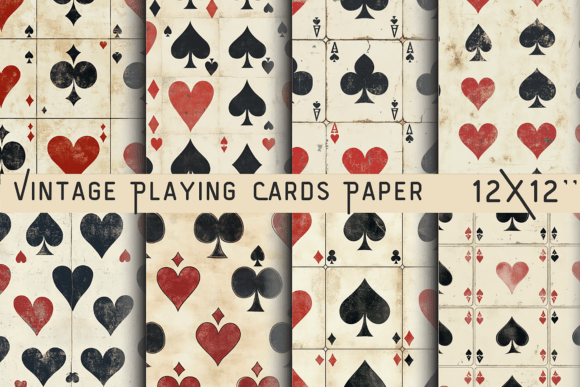
Vintage Playing Cards Paper: A Guide to Antique Aesthetics
There is a specific kind of nostalgia that hits you when you shuffle a deck of cards that has seen better days. It’s the smell of old paper, the soft texture of worn edges, and the faded elegance of a royal flush. For designers and crafters, capturing that exact feeling—without the actual wear and tear—can be a challenge. This is where the Vintage Playing Cards Paper collection steps in, offering a bridge between modern digital precision and the warm, tactile history of the casino floor.
This isn't just a background; it is a mood board in a box. Delivered as a high-resolution digital pack, this collection features 12 distinct designs that embrace the "antique paper" aesthetic. We are talking about a rich palette of sepia browns, deep reds, and faded golds. The textures mimic the grain of aged card stock, complete with subtle imperfections that make digital designs feel grounded in reality. Because these files are delivered at 3600 × 3600 pixels and 300 DPI, they are not just for screen use. They are built for heavy lifting in print production, ensuring that whether you are creating a planner insert or a full-scale poster, the image remains crisp and professional.
The Anatomy of the Aesthetic
Understanding the visual personality of this collection helps you use it effectively. The "Vintage Playing Cards Paper" look is defined by more than just the suits of hearts and spades. It relies on opacity and layering. Unlike modern digital assets that often feature transparent backgrounds, these PNG files feature opaque backgrounds. This is a deliberate design choice. It creates a solid foundation, allowing you to layer text and ephemera on top without worrying about the edges of the background disappearing or looking "floaty."
The color theory at play here is distinct. The dominant sepia and cream tones evoke a sense of history, while the deep reds and blacks provide the necessary contrast for readability. When you use these backgrounds, you are instantly setting a tone that suggests strategy, luck, and classic entertainment. It’s a visual shorthand for "game night" and "vintage luxury."
Real-World Applications for Creators
So, how do you translate a 12x12 inch digital paper into a tangible project? The versatility of the Vintage Playing Cards Paper pack makes it a valuable asset across several disciplines. It functions less like a standard font or typeface and more like a foundational design asset that anchors your entire project.
- Junk Journaling & Scrapbooking: This is the most natural fit. The vintage playing cards aesthetic is perfect for creating focal points in a memory book. You can print these sheets out to create "tip-ins" or use them as the actual background for a page dedicated to travel or family game nights.
- Stationery and Invitations: Planning a themed event? These backgrounds serve as excellent packaging design elements or invitation backdrops. Imagine a poker night invitation where the paper itself looks like it has been sitting in a cigar lounge for decades.
- Digital Content and Social Media: For bloggers and content creators, these textures add depth to flat digital layouts. Use them as a background for a quote graphic or a podcast announcement. The high-resolution ensures they look sharp on high-density screens.
- Brand Identity: If you are building a brand around a bar, a retro clothing line, or a game store, these textures can be integrated into your brand identity. They provide a cohesive visual hierarchy that feels established and trustworthy.
Designing with Texture and Typography
When you pair a textured background like the Vintage Playing Cards Paper with typography, you have to be mindful of readability. A busy background can swallow a delicate sans serif font. Conversely, a bold serif font or a sturdy display font often stands up better to the noise of an aged texture.
Think about contrast. If your background is a dark, faded card deck, your text needs to be light—perhaps that antique cream color found in the margins. If you are using a lighter section of the paper, a deep black or charcoal text will ground the layout. This is where understanding visual hierarchy comes into play. You want the background to support the message, not compete with it.
Practical Guidance for Integration
Before you drop these assets into your next web design or print project, consider these practical tips to get the most out of your investment:
- Evaluate the Scale: Because the files are 12" x 12", they are ideal for square formats like Instagram posts or standard scrapbook pages. For editorial design or logo design, you may need to crop the image to find the "sweet spot" of the texture that doesn't look too repetitive.
- Test Your Pairings: Don't just assume the first font pairing works. Try mixing a handwritten font with a clean modern typography style. The organic nature of the playing card background pairs surprisingly well with digital scripts, creating a mixed-media effect that feels tactile.
- Color Grading: While the pack features a specific color palette (Sepia, Cream, Red, Black, Gold), don't be afraid to adjust the hue in your editing software. A slight adjustment to a cooler blue tone can transform a "vintage casino" look into a "vintage nautical" theme instantly.
- Commercial Use: Always verify the licensing. For small business owners and entrepreneurs, using assets that have clear commercial rights is vital. This allows you to create products for sale—like greeting cards or planner kits—without legal ambiguity.
The Value of High-Fidelity Assets
In a market saturated with low-resolution stock photos, having access to premium assets makes a difference. The 300 DPI specification of this Vintage Playing Cards Paper pack means you aren't limited to digital screens. You can print these designs on high-quality cardstock, and the ink will sit on the page with the crispness of a photograph. This is crucial for professional print quality, especially in packaging design or physical products where the tactile feel of the paper and the sharpness of the image contribute to the perceived value of the item.
Ultimately, this collection is about storytelling. Whether you are a marketer trying to evoke a sense of tradition, a crafter preserving memories, or a designer building a brand, the Vintage Playing Cards Paper provides the visual vocabulary to tell a story of timeless entertainment and classic style.